
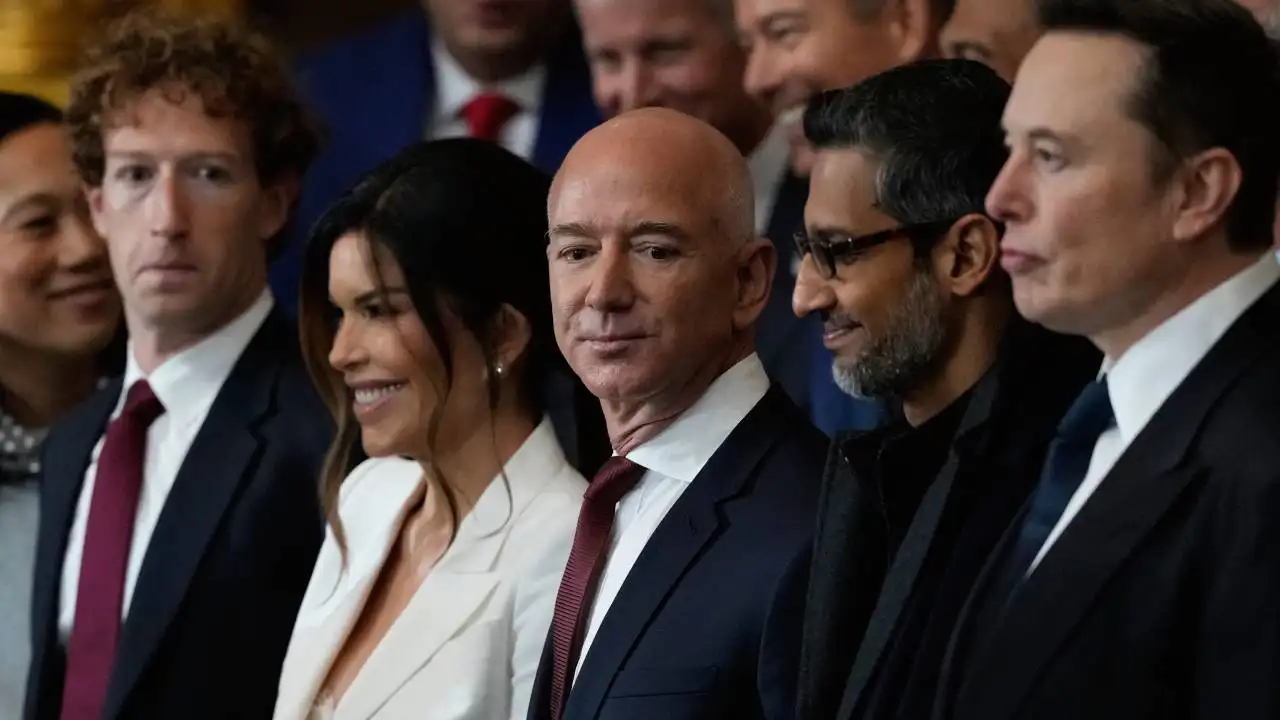
Investing is often described as an art and a science, a delicate balance of intuition, discipline, and calculated risk. The world’s richest investors have mastered this craft, turning modest beginnings into staggering fortunes that shape industries and economies. From tech visionaries to hedge fund titans, these individuals have not only amassed wealth but also redefined how we think about money, markets, and opportunity. In this article, we’ll dive into the lives, strategies, and legacies of the seven richest investors on the planet in 2025, offering insights into their approaches and what aspiring investors can learn from them. Whether you’re a beginner looking to dip your toes into the stock market or a seasoned trader seeking inspiration, this journey through the minds of financial giants will leave you motivated and informed.
Warren Buffett: The Oracle of Omaha
Warren Buffett, often called the Oracle of Omaha, is the poster child for value investing, with a net worth of approximately $149.6 billion as of February 2025. His philosophy of buying undervalued companies with strong fundamentals has made him a legend. Through Berkshire Hathaway, Buffett has built a diversified empire, owning stakes in iconic brands like Apple, Coca-Cola, and American Express.
Buffett’s journey began at age 11, when he bought his first stock. By 14, he was investing in farmland, a move that foreshadowed his knack for spotting long-term value. His disciplined approach—rooted in the teachings of his mentor, Benjamin Graham—emphasizes patience and thorough research, making him a beacon for investors worldwide.
Buffett’s Investment Philosophy
Buffett’s strategy hinges on the concept of a “moat”—a competitive advantage that protects a company from rivals. He seeks businesses with strong balance sheets, low debt, and consistent cash flow, holding them for decades to maximize returns.
His famous quote, “Be fearful when others are greedy, and greedy when others are fearful,” reflects his contrarian mindset. This approach allowed him to capitalize on market downturns, like the 2008 financial crisis, when he invested heavily in companies like Goldman Sachs.
Key Investments and Achievements
- Apple: Berkshire’s largest holding, valued at over $100 billion, showcases Buffett’s shift toward tech.
- Coca-Cola: A decades-long investment that highlights his love for consumer staples.
- American Express: A stake he’s held since the 1960s, proving the power of long-term commitment.
Pros:
- Disciplined, long-term approach minimizes risk.
- Focus on fundamentals ensures stable returns.
Cons:
- Requires immense patience, which may not suit active traders.
- Heavy reliance on market inefficiencies can limit opportunities in efficient markets.
Elon Musk: The Visionary Trailblazer
Elon Musk, with a net worth of $379 billion as of August 2025, is more than just an investor—he’s a creator of wealth through innovation. As the CEO of Tesla, SpaceX, and xAI, Musk has transformed industries while building a fortune that makes him the richest person alive. His investments are bold, often betting on futuristic technologies.
Musk’s story is one of relentless ambition. Born in South Africa, he taught himself to code at 10 and sold his first video game at 12. His early success with Zip2 and PayPal laid the foundation for his later ventures, where he reinvested his wealth into world-changing ideas like electric vehicles and space exploration.
Musk’s Investment Strategy
Musk’s approach is high-risk, high-reward. He invests in companies that align with his vision of advancing humanity, often putting his own capital at stake. His ability to anticipate trends, like the rise of AI and sustainable energy, has driven his wealth to unprecedented heights.
Unlike traditional investors, Musk doesn’t diversify much. His wealth is heavily tied to Tesla and SpaceX, a strategy that’s paid off but carries significant risk. His recent merger of X and xAI into XAI Holdings reflects his belief in AI’s transformative potential.
Key Investments and Achievements
- Tesla: Musk’s largest wealth driver, valued at over $1 trillion in 2025.
- SpaceX: The most valuable private company, with a $350 billion valuation.
- xAI: A fast-growing AI venture, valued at $23.4 billion.
Pros:
- Visionary bets on emerging industries yield massive returns.
- Direct involvement in companies ensures alignment with goals.
Cons:
- High concentration in few assets increases volatility.
- Relies heavily on personal innovation, which may not be replicable.
Larry Ellison: The Tech Titan
Larry Ellison, Oracle’s co-founder, boasts a net worth of $288 billion, making him one of the wealthiest tech investors. His fortune stems from Oracle’s dominance in enterprise software, but his savvy investments in real estate and other tech firms have cemented his status.
Ellison’s brash personality and relentless drive set him apart. Starting Oracle in 1977 with just $2,000, he turned it into a global powerhouse. His love for luxury—owning islands and yachts—reflects his larger-than-life approach to both business and investing.
Ellison’s Investment Strategy
Ellison combines entrepreneurial instinct with strategic acquisitions. He invests in technologies that complement Oracle’s ecosystem, like cloud computing, while diversifying into real estate, including Hawaii’s Lanai Island. His aggressive acquisition strategy has kept Oracle competitive in a fast-evolving tech landscape.
Ellison’s willingness to take risks, paired with a focus on scalable technologies, has driven his wealth. He’s not afraid to bet big, whether on software or prime real estate.
Key Investments and Achievements
- Oracle: The cornerstone of his wealth, with a market cap exceeding $400 billion.
- Lanai Island: A $300 million real estate investment showcasing his diversification.
- NetSuite: Acquired for $9.3 billion, boosting Oracle’s cloud capabilities.
Pros:
- Strategic acquisitions enhance long-term growth.
- Diversification into real estate hedges against tech volatility.
Cons:
- Aggressive approach can lead to overpaying for assets.
- Heavy reliance on Oracle’s performance.
Mark Zuckerberg: The Social Media Mogul
Mark Zuckerberg, with a net worth of $265 billion, transformed social media through Meta Platforms. His investments in AI and the metaverse reflect his forward-thinking approach, even as he navigates controversies around privacy and content moderation.
Zuckerberg’s journey from a Harvard dorm room to global billionaire is the stuff of legend. At 19, he launched Facebook, which evolved into Meta, a conglomerate encompassing Instagram, WhatsApp, and Oculus. His ability to adapt to changing digital trends keeps him among the elite.
Zuckerberg’s Investment Strategy
Zuckerberg invests heavily in emerging technologies, particularly AI and virtual reality. His acquisition of Instagram for $1 billion in 2012 and WhatsApp for $19 billion in 2014 are textbook examples of spotting undervalued assets with massive potential.
He balances innovation with monetization, leveraging Meta’s vast user base to generate advertising revenue while exploring new frontiers like the metaverse.
Key Investments and Achievements
- Meta Platforms: The parent company of Facebook, Instagram, and WhatsApp.
- Oculus: A bet on virtual reality that’s shaping the metaverse.
- AI Investments: Heavy spending on AI to enhance Meta’s platforms.
Pros:
- Early bets on social media and AI have yielded exponential returns.
- Diversified portfolio within tech mitigates risk.
Cons:
- Metaverse investments are speculative and unproven.
- Regulatory scrutiny poses ongoing risks.
Jeff Bezos: The E-Commerce Pioneer
Jeff Bezos, with a net worth of $250 billion, built Amazon into the world’s largest online retailer. His investments span e-commerce, space exploration, and media, reflecting his knack for identifying disruptive opportunities.
Bezos started Amazon in 1994 from his garage, initially selling books. His relentless focus on customer experience and innovation turned it into a global juggernaut. After stepping down as CEO, he’s focused on Blue Origin and personal investments, showcasing his diverse interests.
Bezos’ Investment Strategy
Bezos invests in companies that disrupt traditional industries, from retail to space travel. His venture capital firm, Bezos Expeditions, backs startups like Airbnb and Rivian, while Blue Origin aims to revolutionize space tourism.
His philosophy emphasizes long-term growth over short-term profits, a mindset that allowed Amazon to dominate e-commerce despite early losses.
Key Investments and Achievements
- Amazon: The core of his wealth, with a market cap nearing $2 trillion.
- Blue Origin: A space venture competing with SpaceX.
- The Washington Post: A $250 million media investment.
Pros:
- Diversified investments across industries reduce risk.
- Long-term vision drives transformative growth.
Cons:
- High-risk bets like Blue Origin may not yield immediate returns.
- Media investments face challenges in a declining industry.
Jim Simons: The Quant King
Jim Simons, with a net worth of approximately $29.4 billion, revolutionized investing through quantitative analysis. As the founder of Renaissance Technologies, he used mathematical models to uncover market inefficiencies, earning him the nickname “Quant King.”
A former codebreaker and mathematics professor, Simons brought academic rigor to finance. His Medallion Fund, known for its secrecy, has delivered average annual returns of 66% since 1988, a feat unmatched in the industry.
Simons’ Investment Strategy
Simons’ approach relies on data-driven algorithms, minimizing human emotion in trading. His firm employs PhDs in math and physics to develop models that exploit market patterns, a stark contrast to traditional fundamental analysis.
This quantitative strategy requires immense computational power and constant adaptation to changing markets, making it difficult for others to replicate.
Key Investments and Achievements
- Renaissance Technologies: The most successful hedge fund in history.
- Medallion Fund: Known for its astronomical returns.
- Philanthropy: Simons has donated billions to scientific research.
Pros:
- Data-driven approach reduces emotional bias.
- Consistent outperformance of markets.
Cons:
- Requires advanced technical expertise.
- Limited transparency makes replication challenging.
Kenneth Griffin: The Hedge Fund Titan
Kenneth Griffin, with a net worth of around $33 billion, is the founder of Citadel LLC, one of the world’s largest hedge funds. His ability to navigate volatile markets has made him a powerhouse in finance.
Griffin started trading from his Harvard dorm at 19, launching Citadel in 1990. His aggressive trading strategies and risk management have consistently delivered strong returns, even during market downturns.
Griffin’s Investment Strategy
Griffin employs a multi-strategy approach, combining equities, fixed income, and commodities trading. Citadel’s use of technology and data analytics allows it to capitalize on short-term market movements while managing risk.
His focus on hiring top talent and fostering a competitive culture has kept Citadel at the forefront of the hedge fund industry.
Key Investments and Achievements
- Citadel LLC: Manages over $50 billion in assets.
- Market-Making: Citadel Securities is a leading market maker.
- Real Estate: Significant investments in luxury properties.
Pros:
- Diversified strategies mitigate risk.
- Strong risk management ensures stability.
Cons:
- High-frequency trading carries regulatory risks.
- Complex strategies may not suit retail investors.
Comparing the Top Investors
| Investor | Net Worth (2025) | Key Strategy | Primary Industry | Risk Level |
|---|---|---|---|---|
| Warren Buffett | $149.6B | Value Investing | Diversified | Low |
| Elon Musk | $379B | Visionary Tech Investments | Technology | High |
| Larry Ellison | $288B | Tech Acquisitions | Technology | Moderate |
| Mark Zuckerberg | $265B | Social Media & AI | Technology | Moderate |
| Jeff Bezos | $250B | Disruptive Innovation | E-Commerce/Space | High |
| Jim Simons | $29.4B | Quantitative Trading | Hedge Funds | Moderate |
| Kenneth Griffin | $33B | Multi-Strategy Hedge Funds | Finance | Moderate |
This table highlights the diversity of approaches among the richest investors. Buffett’s low-risk, long-term strategy contrasts with Musk’s high-stakes tech bets, while Simons and Griffin leverage technology in different ways to achieve consistent returns.
What Sets These Investors Apart?
The common thread among these investors is their ability to think differently. Buffett’s patience, Musk’s audacity, and Simons’ mathematical precision showcase varied paths to wealth. They share:
- Discipline: Sticking to their strategies despite market noise.
- Vision: Anticipating trends before they emerge.
- Resilience: Overcoming setbacks, from market crashes to public scrutiny.
Their stories remind us that wealth-building isn’t about luck—it’s about strategy, timing, and relentless pursuit of opportunity.
People Also Ask (PAA)
Who is the richest investor in the world in 2025?
Elon Musk holds the title with a net worth of $379 billion, driven by his stakes in Tesla, SpaceX, and xAI.
How do billionaires invest their money?
Billionaires like Buffett focus on value investing, while others like Musk and Bezos bet on disruptive technologies. Many diversify across stocks, real estate, and private ventures, using data-driven strategies or acquisitions to maximize returns.
What strategies do the richest investors use?
Strategies vary: Buffett emphasizes long-term value, Simons uses quantitative models, and Musk invests in innovation. Common traits include thorough research, risk management, and adaptability to market changes.
Can I learn from these investors?
Absolutely. Books like Buffett’s “The Intelligent Investor” (inspired by Benjamin Graham) or Simons’ quantitative approach offer lessons. Start small, focus on fundamentals, and stay disciplined.
Lessons for Aspiring Investors
These investors offer timeless lessons:
- Start Early: Buffett and Griffin began in their teens, leveraging time to compound returns.
- Know Your Strengths: Simons’ math background shaped his strategy, while Musk’s vision drove his.
- Stay Disciplined: Emotional decisions kill returns. Follow a clear strategy, whether it’s value investing or tech disruption.
- Diversify Wisely: While Musk bets big on a few companies, Buffett and Bezos spread their wealth across industries.
Tools to Get Started:
- Robinhood: A user-friendly platform for beginners to trade stocks commission-free.
- Vanguard: Ideal for low-cost index funds, aligning with Buffett’s philosophy.
- Bloomberg Terminal: For advanced investors seeking real-time data, like Griffin’s team.
FAQ
Q: How did Warren Buffett become so rich?
A: Buffett’s wealth comes from value investing through Berkshire Hathaway, focusing on undervalued companies with strong fundamentals. His long-term approach and disciplined stock picks, like Apple and Coca-Cola, have compounded his wealth over decades.
Q: Is Elon Musk’s wealth only from Tesla?
A: No, Musk’s wealth is tied to Tesla, SpaceX, xAI, and X. His stakes in these companies, especially Tesla and SpaceX, drive his $379 billion net worth, with SpaceX valued at $350 billion.
Q: Can regular people invest like these billionaires?
A: Yes, but on a smaller scale. Adopt Buffett’s value investing by researching undervalued stocks, or follow Musk’s lead by investing in innovative ETFs like ARK Innovation. Use platforms like E*TRADE or Fidelity to start.
Q: What risks do these investors face?
A: High-risk strategies like Musk’s can lead to volatility, while Buffett’s conservative approach may miss short-term gains. Regulatory scrutiny (Zuckerberg) and market crashes (Griffin) are constant threats.
Q: Where can I learn more about investing?
A: Read “The Intelligent Investor” by Benjamin Graham, follow Buffett’s Berkshire Hathaway letters, or explore online courses on platforms like Coursera or Udemy for practical investing knowledge.
Final Thoughts
The seven richest investors on the planet—Buffett, Musk, Ellison, Zuckerberg, Bezos, Simons, and Griffin—offer a masterclass in wealth creation. Their stories, from dorm-room trades to moonshot ventures, prove that success comes from vision, discipline, and adaptability. Whether you’re inspired by Buffett’s patience or Musk’s boldness, there’s a lesson for every investor. Start small, stay informed, and let time work its magic. The stock market isn’t a get-rich-quick scheme, but with the right strategy, it’s a path to building lasting wealth.
For more insights, check out reputable sources like Forbes’ Billionaires List or Bloomberg’s Billionaires Index to track real-time wealth shifts. Ready to start investing? Platforms like Vanguard or Robinhood can help you take your first steps.