
Introduction to the Feud
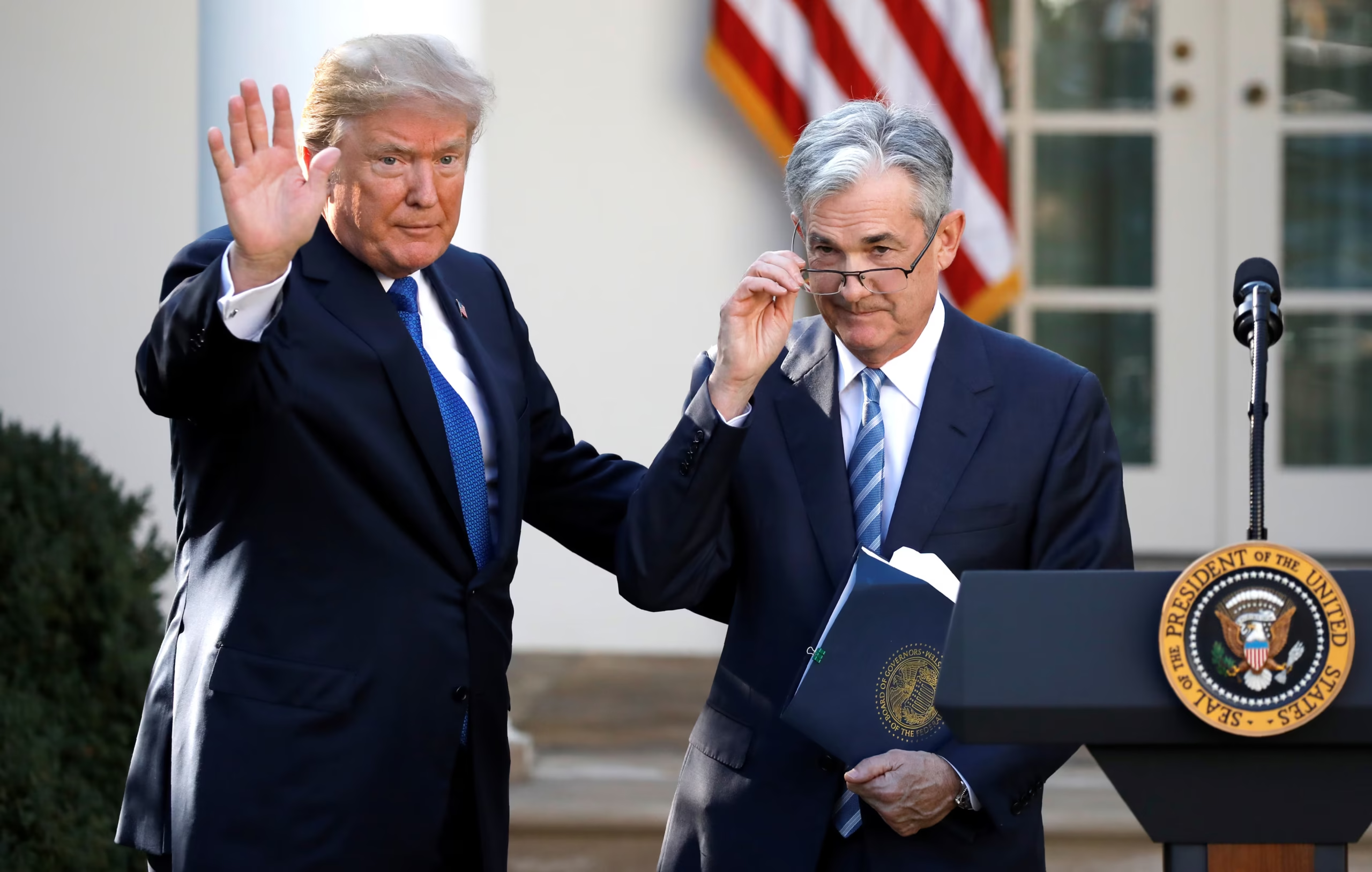
The ongoing clash between U.S. President Donald Trump and Federal Reserve Chair Jerome Powell has reached a boiling point, with Trump threatening a “major lawsuit” over the central bank’s handling of a multibillion-dollar renovation project and demanding immediate interest rate cuts. This saga, unfolding in August 2025, is more than just political theater—it’s a high-stakes battle that could reshape perceptions of the Federal Reserve’s independence and influence the U.S. economy. Let’s unpack this drama, explore its roots, and understand what it means for you, the average American.
The Backstory: Trump vs. Powell
The tension between Trump and Powell isn’t new. It began during Trump’s first term when he appointed Powell as Fed Chair in 2017, only to later regret the decision. Trump has repeatedly called Powell “too late” in adjusting monetary policy, blaming him for economic challenges. Fast forward to 2025, and the rhetoric has escalated. Trump’s latest salvo, posted on Truth Social on August 12, 2025, accused Powell of mismanaging a $2.5 billion renovation of the Fed’s Washington, D.C., headquarters and demanded swift rate cuts, claiming the economy is suffering under Powell’s leadership.
Why the Renovation Sparks Outrage
The Federal Reserve is overhauling two historic buildings, the Marriner S. Eccles Building and the FRB-East Building, both constructed in the 1930s. The project, initially estimated at $1.9 billion, has ballooned to $2.5 billion due to unforeseen issues like asbestos removal and toxic soil contamination. Trump claims the cost should have been a mere $50 million, calling Powell’s oversight “grossly incompetent.” The Fed, however, defends the expenses as necessary to modernize outdated infrastructure and ensure safety.
Trump’s Push for Lower Interest Rates
Trump’s demand for rate cuts stems from his belief that lower borrowing costs would supercharge economic growth and reduce government debt servicing expenses. The Fed’s benchmark rate, steady at 4.25%–4.5% in 2025, hasn’t budged since December 2024. Powell argues that Trump’s aggressive tariff policies, including a 10% tax on all imports, could fuel inflation, making rate cuts risky. This standoff highlights a deeper clash over the Fed’s independence.
The Lawsuit Threat: What’s at Stake?
Trump’s threat to allow a “major lawsuit” against Powell centers on the renovation costs but carries broader implications. Legal experts note that suing a Fed chair over project management is unprecedented and could be a pretext to pressure Powell into compliance or even force his removal. The Supreme Court ruled in May 2025 that Powell cannot be fired for policy disagreements, but Trump seems to be testing the waters for a “for cause” dismissal tied to alleged mismanagement.
Could the Lawsuit Hold Up?
Legal scholars are skeptical about the lawsuit’s viability. The Fed’s renovation budget is overseen by its Board of Governors, not Powell alone, and cost overruns are attributed to external factors like inflation and regulatory requirements. A lawsuit would likely face challenges proving Powell’s personal liability. Still, the threat itself amplifies political pressure on the Fed, raising concerns about its autonomy.
Political Motivations Behind the Threat
Trump’s rhetoric serves a dual purpose: it deflects blame for economic woes and rallies his base by portraying Powell as an obstacle to prosperity. By framing Powell as “too late” and incompetent, Trump positions himself as the economy’s savior. Posts on X reflect this sentiment, with users like @KobeissiLetter echoing Trump’s call for rate cuts and criticizing Powell’s leadership.
The Federal Reserve’s Role and Independence
To understand this feud, we need to grasp the Fed’s role. The Federal Reserve, America’s central bank, sets monetary policy to stabilize prices and maximize employment. Its independence is crucial to avoid political interference, a principle dating back decades. Trump’s public attacks, including calls for Powell’s resignation and threats of legal action, challenge this norm, sparking fears of market volatility.
Why Independence Matters
An independent Fed can make data-driven decisions without bending to political whims. Historical examples, like the 1970s when political pressure led to runaway inflation, underscore the risks of meddling. Powell has emphasized this, stating at a July 2025 ECB event, “We’re never going to be influenced by political pressure.” Yet Trump’s actions test this resolve, unsettling investors.
The Economic Context in August 2025
The U.S. economy in 2025 is a mixed bag. Inflation held steady at 2.7% in July, above the Fed’s 2% target, while core inflation rose to 3.1%. Job growth has slowed, raising recession fears, but Trump insists the economy is “sooo good” that Powell’s caution is unnecessary. The Fed, wary of tariff-driven price hikes, is holding rates steady, with a potential quarter-point cut eyed for September.
The Renovation Controversy: A Closer Look
The Fed’s renovation project is a lightning rod for criticism. Let’s break down the key issues:
- Cost Overruns: Initially budgeted at $1.9 billion, the project now costs $2.5 billion, with some estimates citing $3.1 billion. Factors include asbestos remediation, a sinkhole, and rising material costs.
- Trump’s Critique: He claims the project should have cost $50 million, a figure experts call unrealistic given the buildings’ age and safety requirements.
- Fed’s Defense: Powell has justified the costs, noting the need for structural repairs, modern ventilation, and compliance with safety standards. The Fed even published an explainer to counter Trump’s claims.
Comparing Renovation Costs
| Project | Initial Estimate | Current Estimate | Key Issues |
|---|---|---|---|
| Fed HQ Renovation | $1.9 billion | $2.5–$3.1 billion | Asbestos, toxic soil, design changes |
| Typical Federal Building Upgrade | $50–$200 million | Varies | Basic updates, smaller scale |
Trump’s $50 million figure aligns with smaller-scale federal projects, not a comprehensive overhaul of historic buildings. This discrepancy fuels the narrative of mismanagement but lacks context.
Impact on the Economy and Markets
Trump’s attacks on Powell have ripple effects. Markets are jittery, with the Dow dropping 750 points on April 21, 2025, after earlier threats to fire Powell. Investors fear that undermining the Fed’s independence could erode global confidence in U.S. economic management. Gold prices hit record highs as a safe-haven asset, and the dollar weakened.
Pros and Cons of Lowering Interest Rates
Pros:
- Stimulates borrowing and spending, boosting economic growth.
- Reduces government debt servicing costs, as Trump argues.
- Eases mortgage rates, aiding homebuyers (current 30-year rate: 6.58%).
Cons:
- Risks fueling inflation, especially with tariffs pushing up prices.
- Could overheat the economy, leading to asset bubbles.
- Undermines Fed independence if seen as caving to political pressure.
Personal Story: The Human Cost of High Rates
As a small business owner in 2023, I felt the sting of high interest rates firsthand. My bakery needed a loan to expand, but at 6% interest, the monthly payments were crushing. A rate cut could have saved me thousands, but I also saw how inflation eroded customer purchasing power. It’s a delicate balance—Powell’s caution isn’t baseless, but Trump’s push for relief resonates with folks like me.
The Political Theater: Trump’s Strategy
Trump’s playbook is clear: keep the pressure on Powell while touting economic wins. His Truth Social posts, like the one on August 12, 2025, blend personal insults (“Jerome ‘Too Late’ Powell”) with policy demands, rallying supporters who see the Fed as an elitist institution. He’s also floated replacements like Kevin Warsh and Christopher Waller, signaling a long-term plan to reshape the Fed.
Public Sentiment on X
Posts on X show polarized reactions:
- @MarioNawfal amplifies Trump’s lawsuit threat, framing it as a bold move against Fed inaction.
- @Nas_tech_AI highlights the renovation costs, questioning Powell’s competence.
- Others defend Powell, arguing that tariffs, not the Fed, are driving economic uncertainty.
This divide mirrors broader debates about government overreach and central bank autonomy.
People Also Ask (PAA)
Why is Trump threatening to sue Jerome Powell?
Trump claims Powell mismanaged a $2.5 billion Fed renovation project, alleging it should have cost $50 million. He’s also frustrated by Powell’s refusal to cut interest rates, which Trump believes would boost the economy.
Can the President fire the Federal Reserve Chair?
Legally, the president cannot fire the Fed chair for policy disagreements. A May 2025 Supreme Court ruling clarified that Powell’s removal requires “cause,” such as provable misconduct. A lawsuit over renovations might be an attempt to establish this.
What are the Federal Reserve’s renovation costs?
The Fed’s renovation of its D.C. headquarters, initially estimated at $1.9 billion, now costs $2.5–$3.1 billion due to asbestos removal, toxic soil issues, and design changes. The Fed says these upgrades are essential for safety and efficiency.
How do interest rates affect the economy?
Interest rates influence borrowing, spending, and inflation. Lower rates encourage growth but risk inflation; higher rates curb inflation but can slow the economy. The Fed’s current 4.25%–4.5% rate reflects caution amid tariff-driven price pressures.
What This Means for You
If you’re a homeowner, high interest rates mean pricier mortgages—Freddie Mac reported a 6.58% rate for 30-year loans in August 2025. A rate cut could ease this burden but might drive up prices for goods due to inflation. For investors, the uncertainty around Trump’s threats could mean more market swings. Stay informed by following credible sources like the Federal Reserve’s website or financial news outlets.
Where to Get Reliable Information
- Federal Reserve Website: Offers detailed reports on monetary policy and renovations.
- CNBC, Reuters: Provide balanced coverage of economic news.
- X Platform: Useful for real-time sentiment but verify claims with primary sources.
Best Tools for Tracking Economic Updates
- Bloomberg Terminal: Comprehensive data on markets and policy (paid).
- Yahoo Finance: Free, user-friendly for tracking rates and stocks.
- FedWatch Tool by CME Group: Predicts rate changes based on market data.
Looking Ahead: The Fed’s Next Moves
Powell’s speech at the Jackson Hole symposium on August 22, 2025, hinted at a possible rate cut in September, driven by a slowing job market, not Trump’s demands. The Fed faces a tough choice: cut rates to boost employment and risk inflation, or hold steady and face political heat. Markets rallied after Powell’s remarks, with the Dow climbing 900 points, signaling optimism for relief.
A Hypothetical Scenario
Imagine you’re planning to buy a home in 2026. A rate cut could lower your mortgage payments, saving thousands over the loan’s life. But if tariffs spike inflation, your grocery and gas bills could climb, offsetting those savings. This tug-of-war is why the Fed’s decisions—and Trump’s pressure—matter to everyday Americans.
FAQ
Why does Trump want lower interest rates?
Trump believes lower rates will stimulate growth, reduce government debt costs, and make borrowing cheaper for consumers, like for mortgages or business loans.
Can Trump legally sue Powell over renovations?
While Trump can initiate a lawsuit, proving Powell’s personal liability for cost overruns is unlikely, as the Fed’s Board oversees budgets. Legal experts see it as a political tactic.
How do tariffs affect the Fed’s decisions?
Tariffs, like Trump’s 10% import tax, can raise consumer prices, fueling inflation. The Fed is holding rates steady to monitor these effects, delaying cuts to avoid worsening inflation.
What happens if the Fed loses its independence?
If political pressure sways the Fed, it could lead to erratic monetary policy, market instability, and higher inflation, as seen in the 1970s under political influence.
When might the Fed cut rates?
Fed officials expect two cuts in 2025, possibly starting in September, based on job market weakness and inflation trends, not Trump’s demands.
Conclusion: A Delicate Balance
The Trump-Powell feud is a clash of personalities, politics, and economic philosophy. Trump’s lawsuit threat and rate cut demands spotlight the tension between immediate economic relief and long-term stability. While Powell defends the Fed’s independence, the pressure is mounting, and the outcome will shape markets, mortgages, and your wallet. Stay tuned—this story is far from over.