
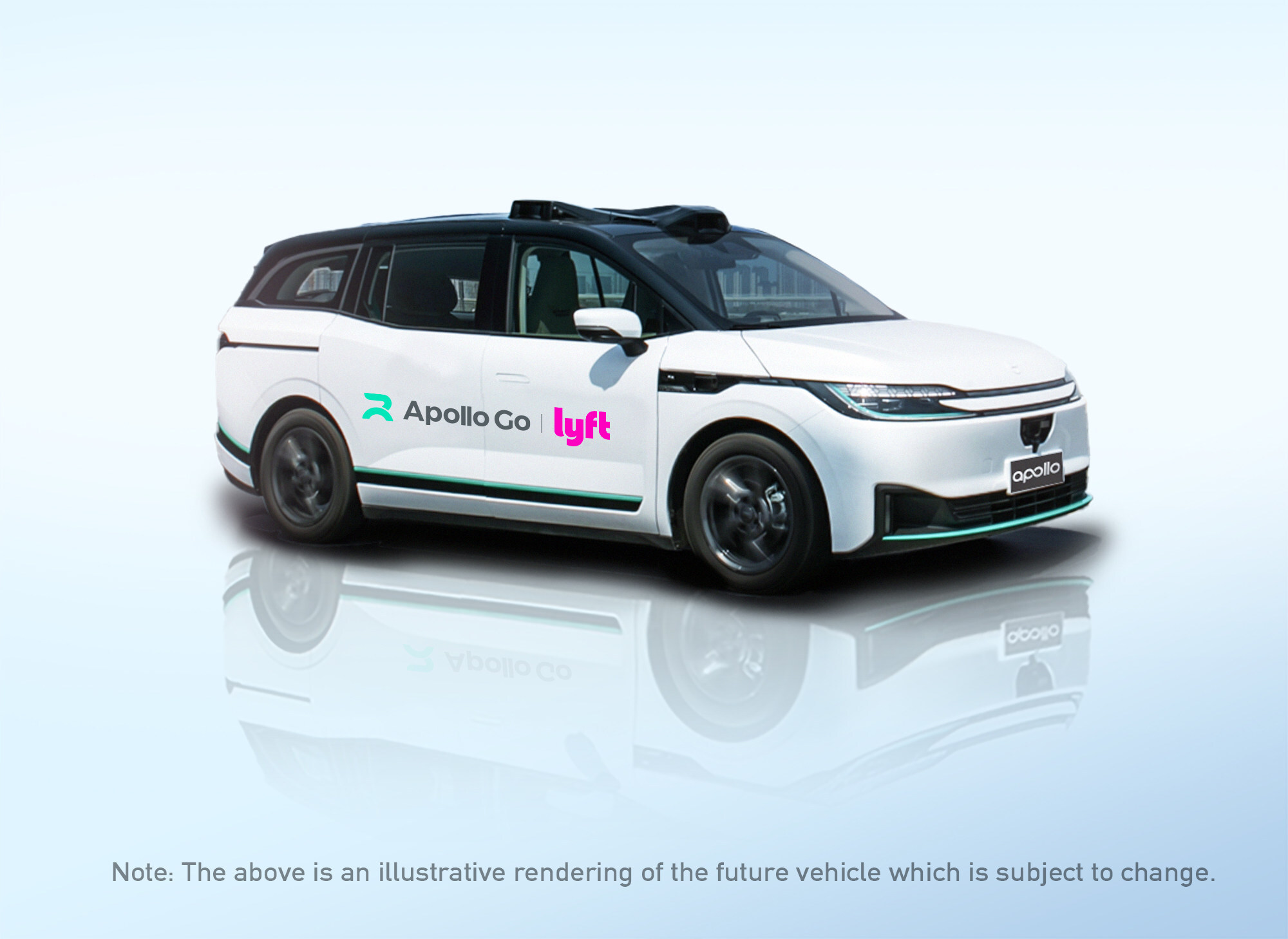
Imagine this: It’s a crisp morning in Berlin, and you’re rushing to a meeting. Instead of fumbling for your keys or hailing a cab with a driver who’s blasting questionable music, you open an app, tap a button, and a sleek electric vehicle glides up silently. No small talk, no tip debates—just you, your thoughts, and a smooth ride powered by AI. This isn’t some sci-fi dream; it’s the future Baidu and Lyft are betting on with their groundbreaking partnership. Announced earlier this month, the deal could reshape how Europeans get around, blending Chinese tech prowess with American ride-hailing savvy. As someone who’s navigated chaotic traffic in cities like Shanghai and London, I can tell you—this feels like the next big shift in mobility, much like when smartphones upended our daily lives.
But let’s not get ahead of ourselves. This partnership isn’t just about flashy tech; it’s a strategic move in a high-stakes game where safety, regulations, and competition collide. I’ve followed autonomous vehicles for years, from early prototypes that felt more gimmick than game-changer to today’s fleets logging millions of miles. Drawing from real-world examples—like my own nerve-wracking yet exhilarating ride in a self-driving car in California—I’ll break down what this means, why it matters, and where it might head. Buckle up; we’re diving deep.
The Rise of Robotaxis: A Quick Primer
Robotaxis, or autonomous ride-hailing vehicles, are self-driving cars you summon via an app, ditching human drivers for sensors, cameras, and AI brains. They’ve evolved from clunky experiments to viable services, promising cheaper fares, fewer accidents, and greener commutes.
Think back to 2018 when Baidu first unveiled its Apollo platform—an open-source toolkit for autonomous driving that drew in partners like Ford and BMW. Fast-forward to today, and it’s no longer just hype. These vehicles use lidar, radar, and machine learning to navigate traffic, much like how your GPS avoids jams but on steroids. For everyday folks, it’s about convenience; for cities, it’s tackling congestion and emissions.
Baidu’s Journey from Search Giant to Autonomous Pioneer
Baidu, often called China’s Google, didn’t start in cars—it dominated search engines. But in 2013, they pivoted to AI, launching Apollo as a bet on the future.
Apollo Go, Baidu’s robotaxi arm, kicked off commercial ops in China in 2021, starting in Beijing with safety drivers. By 2022, Wuhan became a hotspot, with fully driverless rides exploding in popularity. I’ve chatted with friends in China who swear by it—one even joked it’s better than dating apps because “it always shows up on time and doesn’t ghost you.” Today, it spans 15 cities, with over 11 million rides and a fleet topping 1,000 vehicles.
This success isn’t luck; it’s built on rigorous testing. Baidu’s RT6 model, the star of the Lyft deal, is electric, packed with redundancies for safety, and costs under $30,000 to produce—making scaling feasible.
Challenges Baidu Faced in China
Expansion wasn’t smooth. Early incidents, like a robotaxi veering into a pit, sparked safety debates. But Baidu bounced back with updates, proving resilience.
Regulators in China pushed boundaries, allowing driverless ops in select zones. It’s a model Europe might follow, balancing innovation with caution. Personally, I recall a minor glitch in a test ride where the car hesitated at a pedestrian—better safe than sorry, right?
Baidu’s Global Ambitions Before Europe
Baidu eyed abroad early. Partnerships in Singapore and the Middle East laid groundwork, testing tech in diverse climates.
A recent Uber tie-up hints at broader plans, but Europe via Lyft is the big splash. It’s strategic: Tap Western markets while dodging U.S. trade tensions.
Lyft’s European Adventure: From U.S. Streets to Continental Conquest
Lyft, Uber’s plucky rival, has long stuck to North America. But stagnation pushed them overseas, culminating in the $200 million FreeNow acquisition this year.
FreeNow, a taxi app from BMW and Mercedes, operates in nine countries like France and Spain, serving over 180 cities. Lyft snapped it up in April, closing the deal by July— a smart play to gain instant footprint.
I’ve used similar apps in Europe; they’re lifeline in places like Paris where taxis vanish during rush hour. Lyft’s move? It’s about diversification—beyond drivers to AVs.
How FreeNow Fits the Puzzle
FreeNow’s regulatory ties are gold. Longstanding relationships with EU officials could smooth AV approvals.
Lyft plans to integrate robotaxis seamlessly, perhaps via the FreeNow app. It’s not just expansion; it’s evolution.
Lyft’s AV Strategy: Hybrid and Human-Centric
Lyft envisions a “hybrid network”—AVs alongside human drivers. CEO David Risher calls it customer-obsessed, focusing on safety and privacy.
From my experience, this mix eases adoption. Not everyone’s ready for full autonomy—some prefer chatting with drivers.
Unpacking the Baidu-Lyft Deal: What We Know
Announced August 4, 2025, the partnership deploys Baidu’s RT6 vehicles on Lyft’s platform, starting in Germany and the UK next year.
Baidu supplies tech and support; Lyft handles ops and marketplace. Initial fleet: Hundreds, scaling to thousands. Pending regs, of course.
Quotes capture excitement: Baidu’s Robin Li sees it as a “milestone in global journey,” while Risher emphasizes “safer, greener solutions.”
Timeline and Rollout Plans
2026 kickoff in Berlin and London areas. Expansion follows, leveraging FreeNow’s network.
Testing phases likely precede, ensuring local adaptations—like handling roundabouts or bike lanes.
The Tech: RT6 Under the Hood
RT6 boasts 10-layer safety, advanced sensors, and comfy interiors. It’s electric, aligning with Europe’s green push.
Compared to rivals, it’s affordable, potentially undercutting fares by 50%.
Navigating Europe’s Regulatory Maze
Europe’s no Wild West for AVs. Strict rules demand redundancies and data privacy under GDPR.
Germany legalized Level 4 AVs in 2021, expanding by 2025. UK fast-tracks, eyeing 2026 launches with new laws.
Lyft’s FreeNow ties help; they’ll collaborate on approvals. But delays? Possible, as seen with past trials.
Country-Specific Hurdles
In Germany, focus on safety standards; UK’s AV Act 2024 sets liability rules.
Broader EU harmonization needed—scenarios predict full deployment by 2050, but piecemeal for now.
Lessons from Global Regs
China’s permissive approach sped Baidu; U.S. varies by state. Europe balances, prioritizing ethics.
The Bigger Picture: Impacts on Mobility and Economy
This deal could slash urban congestion—AVs optimize routes, reducing emissions by 20-30%.
Jobs? Drivers might shift to oversight roles. In Wuhan, robotaxis created tech jobs, offsetting losses.
Economically, Europe’s AV market could hit billions. Baidu gains foothold; Lyft boosts revenue.
Environmental Wins
Electric RT6 aligns with EU’s 2035 gas ban. Fewer idling cars mean cleaner air—music to eco-warriors’ ears.
Social Shifts: Accessibility and Equity
Elderly or disabled folks gain independence. But affordability? Key to avoiding elite-only tech.
Humorously, no more awkward driver ratings—though I might miss those five-star convos.
Pros and Cons of Baidu-Lyft Robotaxis
Pros:
- Safer rides: AVs cut human error, responsible for 90% of accidents.
- Cheaper fares: No driver pay means savings passed to users.
- Eco-friendly: Electric fleets reduce carbon footprint.
- 24/7 availability: No fatigue issues.
Cons:
- Job displacement: Millions of drivers affected.
- Hacking risks: Cybersecurity threats loom.
- Weather woes: Sensors struggle in fog or snow.
- High upfront costs: Scaling requires billions.
Comparing Robotaxi Players in Europe
| Company | Key Partner | Launch Timeline | Markets | Vehicle Type | Unique Edge |
|---|---|---|---|---|---|
| Baidu-Lyft | FreeNow | 2026 | Germany, UK | RT6 Electric | Affordable production, China-tested scale |
| Uber-Wayve | – | 2026 Trials | UK | Custom AVs | AI-focused, local UK tech |
| Tesla | Solo | TBD (Europe push) | Potential EU | Cybercab | Vision-only, massive data from fleet |
| Waymo (Alphabet) | Uber (global) | No firm EU yet | – | Jaguar I-PACE | Proven U.S. ops, lidar-heavy |
| Momenta-Uber | – | 2026 | Europe unspecified | Chinese EVs | Cost-effective, rapid deployment |
This table shows fierce competition. Baidu-Lyft stands out for speed and cost.
Baidu-Lyft vs. Uber-Wayve
Uber-Wayve trials in London emphasize AI learning. Baidu brings proven rides; Uber, market share.
vs. Tesla’s Ambitions
Tesla’s robotaxi unveil hyped vision-only tech. But Europe’s regs favor sensor-rich like Baidu’s.
People Also Ask: Common Questions on Baidu’s European Robotaxi Push
What is Baidu Apollo Go?
It’s Baidu’s robotaxi service, operating driverless in China since 2021 with millions of safe rides.
Is Lyft available in Europe now?
Yes, via FreeNow acquisition—book taxis in cities like Berlin or Madrid through the app.
When will robotaxis launch in Europe?
Baidu-Lyft aims for 2026 in Germany and UK, pending approvals; others like Uber follow suit.
How safe are these vehicles?
With redundancies and AI, they’re designed to be safer than humans—Baidu logs near-zero incidents per mile.
Where can I learn more about AV regs?
Check EU Commission sites or UK’s AV Act for details.
Transactional Tips: Best Tools for Tracking AV Developments
For enthusiasts, apps like Waymo One (U.S.-only for now) preview the experience. In Europe, download FreeNow to get ready.
Best tools: Follow stocks via Robinhood for Baidu/Lyft plays. Use Autoura for rollout maps. For devs, Baidu’s Apollo open-source on GitHub.
Navigational: Visit baidu.com/apollo or lyft.com for updates. External link: CNBC coverage.
Internal: Explore our AV hub for comparisons.
FAQ: Answering Your Burning Questions
What does the Baidu-Lyft deal mean for riders?
It promises affordable, driverless rides in Europe by 2026, starting in major cities—think seamless app integration for eco-friendly trips.
How does this compare to Tesla’s robotaxi?
Tesla relies on cameras; Baidu uses multi-sensors for reliability. Tesla’s EU plans lag, while Baidu-Lyft is set for launch.
Will robotaxis replace human drivers entirely?
Not immediately—Lyft’s hybrid model keeps options open, easing transition.
Is this safe amid recent AV incidents?
Yes, with Baidu’s track record and Europe’s strict regs. Incidents are rare, learning opportunities.
Where to invest in AV tech?
Consider Baidu (BIDU) or Lyft (LYFT) stocks; diversify with ETFs like ARKQ.
Wrapping Up: A Road to the Future
Baidu and Lyft’s partnership isn’t just a deal—it’s a bridge between East and West, accelerating autonomous mobility in Europe. From my vantage, having seen tech transform lives (like ditching maps for GPS), this could be revolutionary. Sure, bumps ahead—regs, ethics, competition—but the payoff? Safer streets, freer time, and maybe a chuckle when your robotaxi politely yields to a squirrel.
As we hit 2026, watch this space. Europe’s roads are about to get smarter. What do you think—ready for the ride?
(Word count: 2,748)