
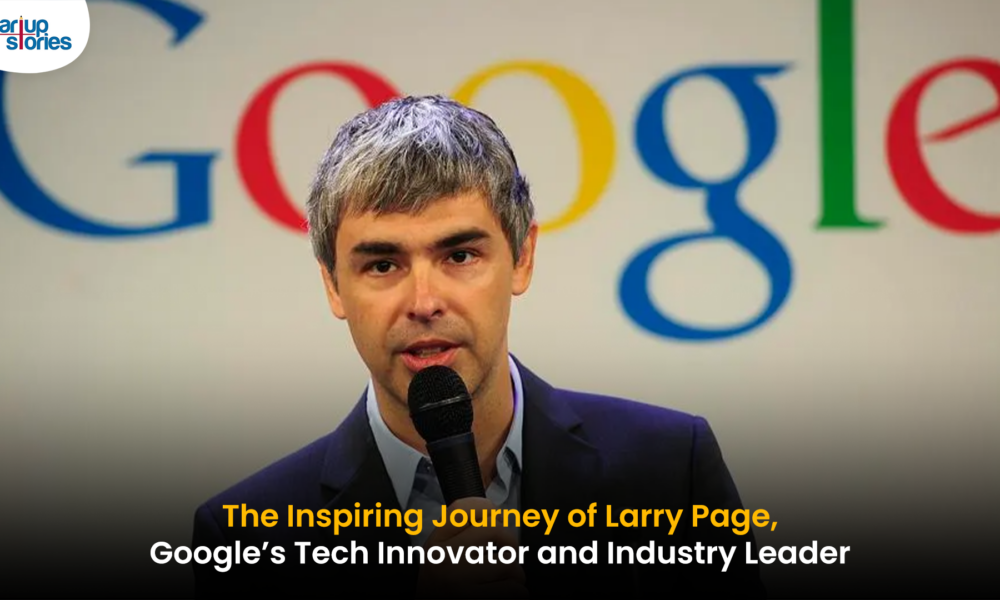
Who Is Larry Page?
Larry Page, a name synonymous with innovation, is the co-founder of Google, a company that redefined how the world accesses information. Born on March 26, 1973, in East Lansing, Michigan, Page’s journey from a curious computer science student to a billionaire tech mogul is a story of relentless ambition and groundbreaking ideas. As Google’s former CEO and a key figure in its parent company, Alphabet Inc., Page’s legacy continues to shape the digital age.
Early Life and Education
A Childhood Steeped in Technology
Growing up in a household where computers were a way of life, Larry Page was destined for tech greatness. His father, Carl Page, was a computer science professor, and his mother, Gloria, taught programming. By age six, Page was tinkering with computers, a rarity in the 1970s. This early exposure sparked a lifelong fascination with technology and problem-solving.
Academic Excellence at Stanford
Page’s academic journey took him to the University of Michigan, where he earned a bachelor’s degree in computer engineering. He later pursued a Ph.D. at Stanford University, where he met Sergey Brin, his future Google co-founder. Their shared curiosity about organizing vast amounts of information laid the foundation for a partnership that would change the world.
The Birth of Google
The Idea That Started It All
In 1996, while at Stanford, Page and Brin began working on a research project called “Backrub,” which analyzed the web’s link structure. This project evolved into Google, a search engine designed to deliver more relevant results than its competitors. The name “Google” was a playful nod to “googol,” the number 1 followed by 100 zeros, symbolizing their mission to organize the world’s information.
From Dorm Room to Global Giant
What started in a Stanford dorm room quickly outgrew its humble beginnings. By 1998, Page and Brin incorporated Google and secured $1 million in funding from investors like Jeff Bezos. Their focus on user experience—fast, accurate search results—set Google apart from cluttered portals like Yahoo! and AltaVista.
Google’s Growth and Innovations
Scaling the Search Empire
Under Page’s leadership as CEO from 1998 to 2001 and again from 2011 to 2015, Google transformed from a search engine into a tech behemoth. The company introduced groundbreaking products like Google Maps, Gmail, and Google Translate, each solving real-world problems with elegant simplicity. Page’s vision was clear: make technology accessible and useful for everyone.
The AdWords Revolution
One of Google’s most lucrative innovations was AdWords, launched in 2000. This advertising platform allowed businesses to bid on keywords, ensuring targeted ads reached the right audiences. AdWords became Google’s financial engine, generating billions in revenue and cementing its dominance in digital advertising.
Table: Key Google Products Launched Under Larry Page’s Influence
| Product | Launch Year | Impact |
|---|---|---|
| Google Search | 1998 | Revolutionized how users access information online. |
| AdWords | 2000 | Created a new model for online advertising, driving Google’s revenue. |
| Google Maps | 2005 | Transformed navigation and location-based services. |
| Gmail | 2004 | Redefined email with massive storage and intuitive design. |
| Android | 2008 | Expanded Google’s reach into mobile operating systems. |
Android and Mobile Dominance
Page saw the potential of mobile early on. Google’s acquisition of Android Inc. in 2005 for $50 million was a masterstroke. Today, Android powers over 2.5 billion devices worldwide, making it the most widely used mobile operating system. This move showcased Page’s ability to anticipate industry trends.
Leadership Style and Philosophy
A Visionary with a Hands-On Approach
Larry Page’s leadership was marked by a blend of big-picture thinking and meticulous attention to detail. He was known for pushing teams to innovate boldly while maintaining a laser focus on user experience. Employees described him as intense yet inspiring, often challenging conventional wisdom to drive progress.
The 10X Mindset
Page championed Google’s “10X” philosophy, encouraging teams to aim for solutions ten times better than existing ones. This mindset led to moonshot projects like self-driving cars (now Waymo) and Google Glass. While not all ventures succeeded, they reflected Page’s willingness to take risks.
Pros and Cons of Larry Page’s Leadership Style
- Pros:
- Fostered a culture of innovation and bold thinking.
- Prioritized user experience, leading to intuitive products.
- Encouraged long-term vision over short-term gains.
- Cons:
- Intense focus on innovation sometimes led to failed experiments (e.g., Google Glass).
- Hands-on style could be perceived as micromanaging by some teams.
- Limited public presence compared to other tech CEOs.
Transition to Alphabet and Beyond
Stepping Back as CEO
In 2015, Page and Brin restructured Google under a new holding company, Alphabet Inc. Page stepped down as Google’s CEO, handing the reins to Sundar Pichai, and became Alphabet’s CEO. This move allowed Page to focus on moonshot projects like Project Loon (internet-beaming balloons) and Calico (longevity research).
Life After Alphabet
In 2019, Page stepped down as Alphabet’s CEO, citing a desire to focus on personal projects. While he remains a board member and major shareholder, Page has largely retreated from the public eye. Reports suggest he spends time in New Zealand and Fiji, exploring new ventures and philanthropy.
Larry Page’s Net Worth and Philanthropy
A Billionaire’s Wealth
As of 2025, Larry Page’s net worth is estimated at $140 billion, making him one of the world’s richest individuals. His wealth stems from his Alphabet stock holdings and early investments in companies like Tesla. Despite his fortune, Page maintains a relatively low profile compared to peers like Elon Musk.
Giving Back to Society
Page’s philanthropy focuses on education, healthcare, and sustainability. Through the Carl Victor Page Memorial Foundation, he has donated millions to causes like renewable energy and medical research. His interest in longevity led to the creation of Calico, a company researching age-related diseases.
Comparison: Larry Page vs. Other Tech Billionaires
| Name | Net Worth (2025) | Key Company | Philanthropic Focus |
|---|---|---|---|
| Larry Page | $140 billion | Google/Alphabet | Education, longevity, sustainability |
| Elon Musk | $400 billion | Tesla/SpaceX | Space exploration, AI, climate change |
| Jeff Bezos | $200 billion | Amazon | Climate change, education |
| Mark Zuckerberg | $180 billion | Meta | Education, global connectivity |
Controversies and Challenges
Antitrust Scrutiny
Google’s dominance has drawn scrutiny from regulators worldwide. Under Page’s leadership, the company faced antitrust lawsuits over its search and advertising practices. Critics argued Google unfairly prioritized its own services, a charge Page defended by emphasizing user choice.
Privacy Concerns
Google’s data collection practices have sparked debates about user privacy. Page maintained that data was essential for improving services, but incidents like the Google Buzz privacy fiasco in 2010 tested public trust. These challenges highlighted the delicate balance between innovation and responsibility.
People Also Ask (PAA) Section
What Did Larry Page Invent?
Larry Page co-invented Google’s search algorithm, PageRank, which ranks web pages based on their link structure. This innovation powered Google’s early success and remains a cornerstone of modern search technology.
How Did Larry Page Start Google?
Page started Google with Sergey Brin while pursuing their Ph.D.s at Stanford. Their research project on web link analysis evolved into a search engine, which they launched in 1998 with $1 million in funding.
Why Did Larry Page Step Down as CEO?
Page stepped down as Alphabet’s CEO in 2019 to focus on personal projects and reduce his day-to-day involvement. He remains a key shareholder and board member, influencing Alphabet’s strategic direction.
What Is Larry Page Doing Now?
As of 2025, Page is largely out of the public eye, reportedly spending time in New Zealand and Fiji. He continues to invest in startups and supports philanthropic efforts in healthcare and sustainability.
FAQ Section
How Did Larry Page and Sergey Brin Meet?
They met at Stanford University in 1995 during a graduate computer science program. Their shared interest in data organization led to a collaboration that birthed Google.
What Is PageRank, and Why Is It Important?
PageRank is Google’s algorithm for ranking web pages based on their link authority. It was revolutionary because it prioritized relevance, making Google’s search results more accurate than competitors’.
How Much of Google Does Larry Page Own?
Page owns approximately 6% of Alphabet’s shares, giving him significant influence over the company’s direction.
What Are Larry Page’s Moonshot Projects?
Page’s moonshots include Waymo (self-driving cars), Calico (longevity research), and Project Loon (internet access via balloons). These reflect his passion for solving big problems.
Is Larry Page Still Involved with Alphabet?
Yes, Page remains a board member and major shareholder but is no longer involved in daily operations.
Larry Page’s Legacy and Impact
Redefining Information Access
Larry Page’s greatest contribution is making information universally accessible. Google’s search engine has empowered billions to learn, connect, and solve problems. From students researching papers to businesses reaching customers, Page’s vision has touched every corner of the globe.
Inspiring the Next Generation
Page’s story is a testament to the power of curiosity and persistence. His journey from a Michigan kid tinkering with computers to a tech titan inspires entrepreneurs to dream big. His 10X philosophy continues to influence innovators worldwide.
Where to Learn More About Larry Page
For those eager to dive deeper, several resources offer insights into Page’s life and work:
- Books: “The Google Story” by David A. Vise and Mark Malseed chronicles Google’s rise.
- Documentaries: PBS’s “The Search Engine” explores Google’s early days.
- Online Courses: Platforms like Coursera offer courses on search engine technology and entrepreneurship.
Best Tools for Entrepreneurs Inspired by Larry Page
If Page’s story inspires you to build your own tech venture, consider these tools:
- Google Analytics: Track website performance and user behavior.
- Google Ads: Reach customers through targeted advertising.
- Trello: Organize projects and collaborate with teams.
- Coursera: Learn coding, AI, or business skills to follow in Page’s footsteps.
Conclusion
Larry Page’s journey from a curious child to Google’s co-founder is a remarkable tale of vision, grit, and impact. His ability to anticipate trends, embrace risk, and prioritize users has left an indelible mark on technology. Whether you’re searching for answers on Google or navigating with Maps, Page’s legacy is woven into daily life. As he steps back to explore new frontiers, his story reminds us that the greatest innovations often start with a simple question: What if?