
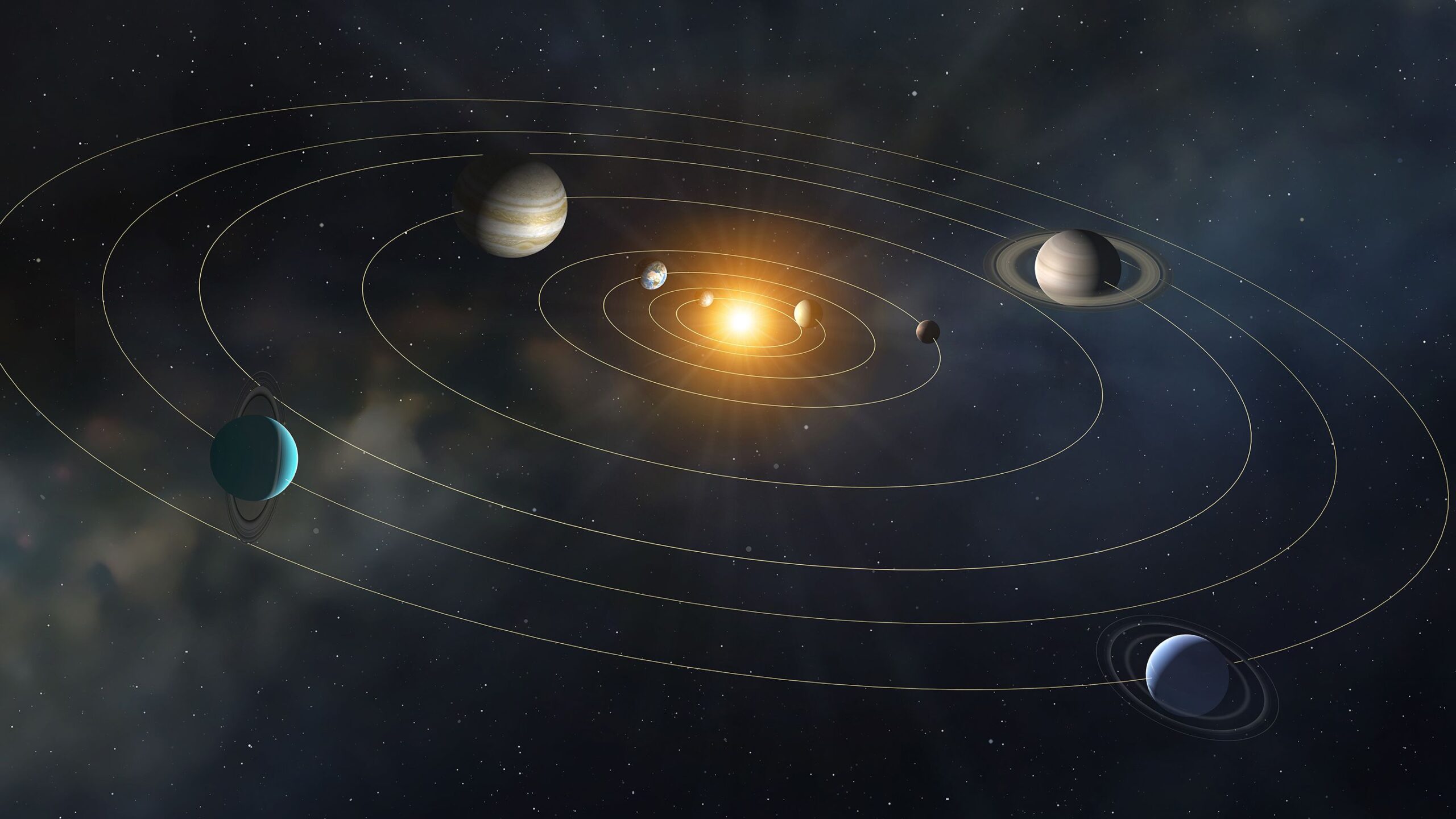
Gazing up at the night sky, it’s easy to feel like the stars are all impossibly far away, mere pinpricks of light in an endless void. But some of those twinkling dots are closer than you might think—our cosmic neighbors, just a few light-years away, sharing the same galactic block as our Sun. These nearby stars aren’t just fascinating for their proximity; they’re windows into the universe’s diversity, from fiery red dwarfs to dazzling binary systems. In this article, we’ll take a deep dive into the 10 closest stars to Earth, exploring their unique characteristics, the science behind their discovery, and why they captivate astronomers and dreamers alike. Whether you’re a stargazer or just curious about what’s out there, this journey through our stellar neighborhood will spark your imagination.
Why Nearby Stars Matter
The stars closest to Earth are more than just celestial landmarks; they’re key to understanding our place in the cosmos. Their proximity makes them ideal for studying stellar evolution, planetary systems, and even the potential for life beyond our planet. Plus, they’re the first stops we’d consider for interstellar travel—if we ever crack that cosmic code.
A Personal Connection to the Stars
I remember my first time stargazing with a telescope, squinting through the lens, hoping to catch a glimpse of something extraordinary. The idea that some stars were “close” by cosmic standards blew my mind. It’s humbling to think that Proxima Centauri, our nearest neighbor, is still 4.24 light-years away—a distance that feels both intimate and unfathomable. Let’s meet these stellar neighbors, starting with the one we know best.
The Sun: Our Closest Star
The Sun, our life-giving powerhouse, sits at a cozy 93 million miles (0.0000158 light-years) from Earth. It’s a G-type main-sequence star, about 4.6 billion years old, and it dominates our solar system with its massive presence. Without it, life as we know it wouldn’t exist.
Why the Sun Is Special
The Sun’s not just close—it’s the only star we can study up close, thanks to missions like NASA’s Parker Solar Probe. Its surface, roiling with plasma and punctuated by sunspots, is a dynamic spectacle. But beyond its scientific value, it’s the star we feel connected to every day, warming our planet and lighting our lives.
Proxima Centauri: The Nearest Star Beyond the Sun
At 4.24 light-years away, Proxima Centauri claims the title of the closest star to our Sun. This red dwarf, part of the Alpha Centauri system, is tiny—about one-eighth the Sun’s mass—and too faint to see without a telescope. Yet, it’s a star of immense interest.
A Flare Star with Planetary Potential
Proxima Centauri is a flare star, prone to sudden bursts of brightness that could challenge life on its planets. Speaking of planets, Proxima Centauri b, discovered in 2016, orbits in the habitable zone, sparking dreams of a second Earth. But those flares? They might make habitability a tough sell. Still, the possibility of a nearby world keeps astronomers buzzing.
Alpha Centauri A and B: The Sun’s Twin Siblings
Just a smidge farther at 4.37 light-years, Alpha Centauri A and B form a binary system that’s visible to the naked eye in the Southern Hemisphere. Alpha Centauri A is a near-twin to our Sun, while B is slightly smaller and cooler.
A Binary Dance in the Sky
These two stars orbit each other every 80 years, creating a dazzling celestial waltz. Their Sun-like nature makes them prime targets for planet-hunting missions. While no confirmed planets orbit them yet, their stability and brightness fuel speculation about Earth-like worlds. If we ever send a probe to another star, this system is a top contender.
Barnard’s Star: The Speedy Red Dwarf
Barnard’s Star, 5.96 light-years away, is a red dwarf famous for its blistering speed across the sky—moving 10.4 arcseconds per year, the fastest proper motion of any star. At 10 billion years old, it’s a cosmic elder.
A Star with a Sci-Fi Legacy
Named after astronomer E.E. Barnard, this star has starred in science fiction, from The Hitchhiker’s Guide to the Galaxy to Star Trek. Its potential planet, Barnard’s Star b, is a super-Earth, but it’s likely too cold for life. Its rapid motion makes it a favorite for astronomers tracking stellar dynamics.
Luhman 16: The Brown Dwarf Duo
At 6.59 light-years, Luhman 16 (WISE 1049-5319) is a binary system of brown dwarfs—objects too massive to be planets but too small to sustain full stellar fusion. Located in Vela, it’s invisible to the naked eye.
Not Quite Stars, But Fascinating
Discovered in 2013, Luhman 16’s brown dwarfs might have weather patterns on their surfaces, a quirky feature that sets them apart. While not true stars, their proximity makes them a compelling study for understanding the boundary between stars and planets.
Wolf 359: The Sci-Fi Star
Wolf 359, 7.78 light-years away in Leo, is another faint red dwarf, emitting just 0.1% of the Sun’s light. It’s a cultural icon, thanks to its role in Star Trek as the site of a fictional battle.
A Dim but Intriguing Neighbor
Despite its faintness, Wolf 359 is a flare star with high proper motion. Two candidate planets were identified in 2019, but none are confirmed. Its low luminosity and sci-fi fame make it a star that punches above its weight.
Lalande 21185: The Brightest Invisible Star
At 8.31 light-years in Ursa Major, Lalande 21185 is a red dwarf that’s bright in infrared but too dim for the naked eye. It’s believed to host at least two planets.
A Planetary Haven?
Discovered by Jérôme Lalande in the 18th century, this star’s high proper motion and potential planetary system make it a target for future imaging missions. Its proximity means any planets could be studied in detail, offering clues about red dwarf systems.
Sirius A and B: The Brightest Star in the Sky
Sirius, 8.58 light-years away in Canis Major, is the night sky’s brightest star, thanks to Sirius A’s luminosity. Its companion, Sirius B, is a white dwarf—the dense remnant of a once-massive star.
A Dazzling Duo
Known as the “Dog Star,” Sirius A has been a cultural touchstone for millennia, from ancient Egypt to modern stargazing. Sirius B, discovered in 1862, is a stellar corpse, offering insights into the end stages of stellar life. Their binary dance is a gravitational marvel.
Luyten 726-8: The Flare Star Pair
Luyten 726-8, 8.73 light-years away in Cetus, is a binary system of two red dwarfs, both flare stars known for dramatic brightness spikes. They’re too faint for naked-eye viewing.
A Cosmic Firecracker
Named after Willem Jacob Luyten, this system’s flare activity makes it a dynamic study subject. One candidate planet orbits Luyten 726-8 A, but its habitability is doubtful due to the star’s volatility. It’s a reminder of how active even small stars can be.
Ross 154: The Active Flare Star
Ross 154, 9.68 light-years away in Sagittarius, is another red dwarf with flare activity. Its faintness (magnitude 10.44) keeps it hidden from unaided eyes.
A Star on the Move
This star’s flares make it a lively neighbor, and its proximity ensures it’s a target for ongoing studies. Its high proper motion suggests it’s cruising through the galaxy, adding to its cosmic charm.
Ross 248: The Future Closest Star
At 10.32 light-years in Andromeda, Ross 248 is a faint red dwarf that’s moving closer to us. In about 36,000 years, it’ll overtake Proxima Centauri as our closest stellar neighbor.
A Star with a Future
Its faintness (magnitude 12.3) makes it a telescope-only target, but its trajectory is exciting. Ross 248’s approach reminds us that the cosmos is always in motion, reshaping our neighborhood over millennia.
Comparing the 10 Closest Stars
To make sense of these stellar neighbors, here’s a table summarizing their key traits:
| Star/System | Distance (Light-Years) | Type | Apparent Magnitude | Notable Features |
|---|---|---|---|---|
| Sun | 0.0000158 | G2V | -26.74 | Life-giving, closest star |
| Proxima Centauri | 4.24 | M5.5Ve (Red Dwarf) | 11.09 | Flare star, hosts Proxima b |
| Alpha Centauri A | 4.37 | G2V | 0.01 | Sun-like, binary with B |
| Alpha Centauri B | 4.37 | K1V | 1.34 | Sun-like, binary with A |
| Barnard’s Star | 5.96 | M4.0Ve (Red Dwarf) | 9.53 | Fastest proper motion, super-Earth planet |
| Luhman 16 | 6.59 | L8/T1 (Brown Dwarf) | 10.7 (J band) | Binary brown dwarfs, possible weather |
| Wolf 359 | 7.78 | M6.0V (Red Dwarf) | 13.44 | Flare star, sci-fi fame |
| Lalande 21185 | 8.31 | M2.0V (Red Dwarf) | 7.47 | Hosts two planets, bright in infrared |
| Sirius A | 8.58 | A1V | -1.46 | Brightest in night sky, binary with B |
| Sirius B | 8.58 | DA2 (White Dwarf) | 8.44 | Dense stellar remnant |
| Luyten 726-8 A/B | 8.73 | M5.5Ve/M6.0Ve | 12.54/12.99 | Flare stars, binary system |
| Ross 154 | 9.68 | M3.5Ve (Red Dwarf) | 10.43 | Flare star, high proper motion |
| Ross 248 | 10.32 | M5.5Ve (Red Dwarf) | 12.29 | Will become closest star in 36,000 years |
Pros and Cons of Studying Nearby Stars
Pros:
- Proximity: Easier to observe with telescopes, enabling detailed studies.
- Planetary Potential: Many host exoplanets, some in habitable zones.
- Interstellar Travel Targets: Closest stars are logical first stops for future missions.
- Diversity: Range of star types (red dwarfs, Sun-like, white dwarfs) offers varied research opportunities.
Cons:
- Faintness: Most are red dwarfs, too dim for naked-eye observation.
- Flare Activity: Red dwarfs’ flares may hinder planetary habitability.
- Distance Challenges: Even “close” stars are light-years away, complicating direct exploration.
- Limited Data: Some systems (e.g., Alpha Centauri) lack confirmed planets, leaving gaps in knowledge.
How We Measure Stellar Distances
Determining how far stars are from Earth is no small feat. Astronomers rely on several methods:
- Parallax: Measures a star’s apparent shift against background stars as Earth orbits the Sun. It’s most accurate for nearby stars.
- Standard Candles: Compares a star’s apparent brightness to its intrinsic luminosity to estimate distance.
- Spectroscopic Methods: Analyzes a star’s spectrum to determine its type and distance.
The Gaia space telescope has revolutionized these measurements, providing precise data on stars like those in our list.
My Brush with Parallax
I once tried explaining parallax to a friend using two pencils and a squinted eye—let’s just say it didn’t go as planned. But the concept is simple: it’s like holding your thumb up and watching it shift against the background as you blink each eye. That tiny shift, scaled up to cosmic distances, helps us pinpoint stars like Proxima Centauri with incredible accuracy.
Why Red Dwarfs Dominate Our Neighborhood
You might’ve noticed a trend: most of our closest stars are red dwarfs. These small, cool stars make up about 70% of the Milky Way’s stellar population. They’re long-lived, burning for trillions of years, but their faintness and flare activity make them tricky hosts for habitable planets.
The Red Dwarf Paradox
Red dwarfs are everywhere, yet their planets face harsh conditions. Proxima Centauri b, for example, might be in the habitable zone, but its star’s flares could strip away any atmosphere. It’s a cosmic tease—worlds so close, yet so challenging for life.
People Also Ask (PAA)
Here are answers to common questions about the closest stars, pulled from real Google searches:
What Is the Closest Star to Earth Besides the Sun?
Proxima Centauri, at 4.24 light-years, is the closest star beyond our Sun. It’s a red dwarf in the Alpha Centauri system, too faint to see without a telescope but fascinating for its potential planets.
Can You See Any of These Stars Without a Telescope?
Yes, but only a few. Alpha Centauri A and B and Sirius A are visible to the naked eye. The rest, mostly red dwarfs, require telescopes due to their faintness.
Are There Planets Around These Stars?
Several have confirmed or candidate planets. Proxima Centauri b, Barnard’s Star b, and Lalande 21185’s planets are notable, with Proxima b in the habitable zone. Ongoing research may reveal more.
Why Are Most Nearby Stars Red Dwarfs?
Red dwarfs are the most common stars in the Milky Way, making up about 70% of its stellar population. Their small size and long lifespan mean they’re scattered throughout our galactic neighborhood.
Tools and Resources for Stargazers
Want to explore these stars yourself? Here are some tools and resources:
- Stellarium: A free, open-source planetarium software to locate stars like Sirius or Alpha Centauri. Download Stellarium.
- OSR Star Finder App: An interactive app for identifying stars and constellations. OSR Star Finder.
- SkySafari: A mobile app for real-time sky mapping, perfect for spotting Barnard’s Star with a telescope.
- Local Astronomy Clubs: Join clubs like the Astronomical Society of the Pacific for stargazing events. ASP Website.
My Stargazing Tip
When I started stargazing, I used a basic telescope and Stellarium to track Sirius. It’s thrilling to point your scope at a star and know it’s “only” 8.58 light-years away. Start with bright stars like Sirius A, then hunt for fainter ones like Lalande 21185 with a good telescope.
The Future of Nearby Star Exploration
The closest stars aren’t just pretty lights—they’re targets for future exploration. Projects like Breakthrough Starshot aim to send tiny probes to Alpha Centauri, while telescopes like the James Webb Space Telescope study exoplanets around stars like Proxima Centauri. These efforts could reveal whether our neighbors host life or habitable worlds.
A Dream of Interstellar Travel
Imagine sending a probe to Proxima Centauri b, snapping photos of a rocky world bathed in red light. It’s a long shot, but the idea keeps me up at night, wondering what’s out there. The closest stars are our first step toward answering that question.
FAQ
How Far Is the Closest Star to Earth?
The closest star, besides the Sun, is Proxima Centauri at 4.24 light-years (about 25 trillion miles). Its proximity makes it a prime target for study.
Why Can’t We Visit Nearby Stars Yet?
The vast distances, even to Proxima Centauri, are beyond current technology. A spacecraft traveling at Voyager 1’s speed would take over 70,000 years to reach it.
Do Any Nearby Stars Have Habitable Planets?
Proxima Centauri b and Luyten’s Star b are in habitable zones, but flares and radiation pose challenges. No confirmed habitable planets exist yet.
How Do Astronomers Find These Stars?
Astronomers use parallax, spectroscopy, and telescopes like Gaia to measure distances and properties. Parallax is especially effective for nearby stars.
Will Any of These Stars Get Closer?
Yes, Ross 248 will become the closest star in about 36,000 years, passing within 3.02 light-years of Earth.
Final Thoughts
Our stellar neighbors, from the Sun’s life-giving warmth to Ross 248’s distant approach, remind us that the universe is both vast and intimate. These 10 closest stars offer a glimpse into the diversity of the cosmos—red dwarfs flaring with energy, Sun-like stars hinting at Earth-like worlds, and white dwarfs whispering tales of stellar death. Whether you’re peering through a telescope or just daydreaming under the night sky, these stars connect us to something bigger. So, next time you look up, remember: you’re not just seeing lights—you’re meeting the neighbors. Grab a telescope, download a star map, and start exploring. Who knows what discoveries await?