
Introduction to Investing Legends
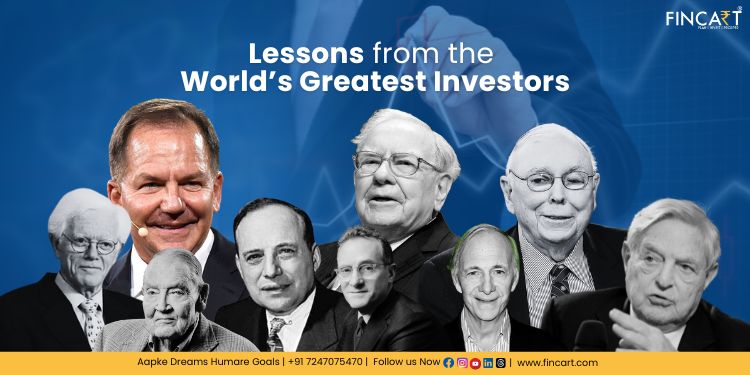
Investing isn’t just about numbers—it’s about vision, discipline, and a knack for seeing what others miss. The world’s greatest investors, from Warren Buffett’s value-driven approach to George Soros’ bold market bets, have redefined wealth creation. This article dives into the lives, strategies, and lessons of 11 iconic investors whose methods continue to inspire millions. Whether you’re a beginner or a seasoned investor, their stories offer timeless wisdom to navigate the markets.
Why Study the Greatest Investors?
Learning from the best isn’t just motivational—it’s practical. These investors didn’t just get lucky; they built repeatable systems that turned opportunities into fortunes. By studying their approaches, you can adopt principles that work across market cycles. From long-term value investing to short-term speculative plays, their strategies offer a roadmap for financial success.
The Power of Patience and Discipline
Patience and discipline are the cornerstones of great investing. Investors like Warren Buffett emphasize waiting for the right opportunity, even if it takes years. Their ability to stick to a plan, despite market noise, sets them apart from the crowd.
Diverse Strategies, Singular Success
No two investors are alike. Some, like Peter Lynch, hunt for undervalued growth stocks, while others, like Ray Dalio, focus on macroeconomic trends. Yet, their success stems from a shared commitment to understanding markets deeply and acting decisively. This diversity shows there’s no single path to wealth—just principles that work.
Warren Buffett: The Oracle of Omaha
Warren Buffett, often called the greatest investor of all time, built a $115 billion fortune through value investing. His philosophy? Buy great companies at fair prices and hold them for the long haul. His firm, Berkshire Hathaway, owns stakes in giants like Apple and Coca-Cola, proving his approach’s enduring success.
Key Lesson: Buy Quality, Hold Forever
Buffett’s mantra is simple: invest in businesses you understand and would happily own for decades. He famously said, “If you aren’t willing to own a stock for 10 years, don’t even think about owning it for 10 minutes.” This long-term mindset minimizes risk and maximizes returns.
Buffett’s Strategy in Action
Buffett’s purchase of Coca-Cola in 1988 is a classic example. He saw a globally loved brand with consistent cash flow and bought shares at a reasonable valuation. Decades later, those shares have delivered massive returns, showcasing the power of patience and quality.
Peter Lynch: The Everyday Investor’s Hero
Peter Lynch ran Fidelity’s Magellan Fund from 1977 to 1990, achieving an average annual return of 29%. His secret? Investing in what he knew, from small growth stocks to household names. Lynch’s knack for spotting “tenbaggers” (stocks that 10x) made him a legend.
Lesson: Invest in What You Know
Lynch believed everyday investors could outperform Wall Street by observing trends in their daily lives. He famously invested in Dunkin’ Donuts after noticing its popularity. This “invest in what you know” philosophy empowers anyone to find winners.
Lynch’s Portfolio Diversity
Lynch didn’t stick to one sector—he owned everything from retailers to tech firms. His diversified portfolio, often holding over 1,400 stocks, spread risk while capturing growth. This approach teaches us to stay open-minded and explore opportunities everywhere.
George Soros: The Man Who Broke the Bank
George Soros is known for his $1 billion profit shorting the British pound in 1992. His Quantum Fund averaged over 30% annual returns, driven by bold bets on macroeconomic trends. Soros’ gut-driven, speculative style sets him apart from disciplined value investors.
Lesson: Embrace Calculated Risks
Soros teaches us that big rewards come from big risks—but only when backed by deep analysis. His 1992 trade wasn’t luck; it was a calculated move based on Britain’s unsustainable currency peg. Understanding market dynamics can unlock massive opportunities.
Soros’ Reflexivity Theory
Soros’ concept of reflexivity argues that markets are influenced by investors’ biases, creating feedback loops. By recognizing these distortions, he profited from market inefficiencies. This theory encourages investors to question narratives and think critically.
Benjamin Graham: The Father of Value Investing
Benjamin Graham, Buffett’s mentor, wrote The Intelligent Investor, a bible for value investors. His strategy focused on buying stocks trading below their intrinsic value, offering a “margin of safety.” Graham’s disciplined approach laid the foundation for modern investing.
Lesson: Focus on Intrinsic Value
Graham taught investors to treat stocks as businesses, not ticker symbols. By calculating a company’s true worth—based on earnings, assets, and growth—you can find bargains even in turbulent markets. This principle remains a cornerstone of smart investing.
Graham’s Legacy
Graham’s ideas shaped not just Buffett but countless others. His emphasis on fundamental analysis—digging into financial statements—helps investors avoid emotional traps. His timeless advice: “The stock market is a voting machine in the short term, but a weighing machine in the long term.”
John Bogle: The Champion of the Small Investor
Jack Bogle founded Vanguard and popularized low-cost index funds, revolutionizing investing. His belief that most active managers underperform the market led to the creation of the first S&P 500 index fund. Bogle’s work made wealth-building accessible to millions.
Lesson: Keep Costs Low
Bogle’s mantra was simple: high fees destroy returns. By investing in low-cost index funds, you capture market gains without overpaying managers. His approach proves that simplicity often beats complexity in investing.
Bogle’s Impact
Vanguard’s index funds now manage trillions, a testament to Bogle’s vision. His focus on long-term, low-cost investing empowers everyday people to build wealth without needing Wall Street’s expertise. Bogle’s legacy is a reminder that accessibility matters.
Ray Dalio: The Macro Maestro
Ray Dalio’s Bridgewater Associates is the world’s largest hedge fund, known for its “All Weather” portfolio. Dalio’s principles-based approach, blending economic cycles and risk parity, delivered consistent returns. His $19 billion fortune reflects his macro mastery.
Lesson: Diversify Across Economic Cycles
Dalio’s strategy balances assets to perform in any economic environment—growth, recession, inflation, or deflation. By understanding macroeconomic trends, you can build a resilient portfolio. His approach teaches us to think beyond individual stocks.
Dalio’s Principles
Dalio’s book Principles outlines his philosophy of radical transparency and data-driven decisions. His firm’s use of algorithms to analyze economic data sets a high bar for precision. This systematic approach inspires investors to stay objective and adaptable.
Jim Simons: The Quant King
Jim Simons’ Renaissance Technologies achieved a 66% annual return with its Medallion Fund, using mathematical models to trade. A former codebreaker, Simons applied data science to markets, revolutionizing quantitative investing. His $28 billion fortune speaks to his genius.
Lesson: Leverage Data and Technology
Simons showed that data-driven strategies can outperform human intuition. By analyzing patterns and probabilities, his firm exploited market inefficiencies. This approach encourages modern investors to embrace technology and analytics.
Simons’ Secretive Success
Renaissance’s Medallion Fund is famously closed to outsiders, but its success highlights the power of disciplined, systematic trading. Simons’ blend of math and markets proves that unconventional thinking can yield extraordinary results.
Carl Icahn: The Activist Investor
Carl Icahn, with a $9 billion fortune, is known for shaking up underperforming companies. His activist investing—buying stakes to influence management—has transformed firms like Apple and Netflix. Icahn’s bold, confrontational style delivers results.
Lesson: Take Control of Your Investments
Icahn teaches us that investors can drive change. By pushing for better management or strategic shifts, he unlocked value in stagnant companies. This approach shows the power of active engagement over passive ownership.
Icahn’s High-Profile Wins
Icahn’s battle with Apple in 2013 led to a $150 billion stock buyback, boosting shareholder value. His ability to spot undervalued firms and force change underscores the importance of conviction and influence in investing.
Kenneth Griffin: The Hedge Fund Titan
Kenneth Griffin’s Citadel has delivered consistent returns through market-neutral strategies. With a $33 billion fortune, Griffin’s data-driven, multi-strategy approach thrives in volatile markets. His success highlights the power of diversification and discipline.
Lesson: Adapt to Market Conditions
Griffin’s ability to pivot across asset classes—stocks, bonds, commodities—ensures steady returns. His focus on risk management and real-time data teaches investors to stay flexible and resilient in any market.
Citadel’s Edge
Citadel’s use of cutting-edge technology and top talent sets it apart. Griffin’s emphasis on hiring the best and leveraging data mirrors the importance of building a strong foundation for investing success.
Stanley Druckenmiller: The Macro Maverick
Stanley Druckenmiller, with a $6.5 billion fortune, is known for his macro bets, like shorting the British pound alongside Soros in 1992. His ability to anticipate global trends and act decisively makes him a legend in hedge fund circles.
Lesson: Trust Your Conviction
Druckenmiller’s success comes from deep research and bold action. He once said, “When you have tremendous conviction on a trade, you have to go for the jugular.” This mindset encourages investors to act decisively when opportunities arise.
Druckenmiller’s Flexibility
Unlike rigid value investors, Druckenmiller adapts to changing markets. His shift from tech stocks in 2000, just before the dot-com crash, saved billions. This flexibility teaches us to stay nimble and avoid dogma.
Seth Klarman: The Value Investing Purist
Seth Klarman’s Baupost Group has delivered stellar returns through disciplined value investing. His book Margin of Safety is a cult classic among investors. Klarman’s $1.5 billion fortune reflects his focus on undervalued assets and risk management.
Lesson: Prioritize Risk Management
Klarman emphasizes protecting capital above all else. By buying assets at deep discounts and maintaining cash reserves, he minimizes losses. This cautious approach ensures long-term success, even in turbulent markets.
Klarman’s Contrarian Streak
Klarman thrives on going against the crowd. His investments in distressed assets, like bankrupt firms, often yield outsized returns. This contrarian mindset teaches us to look where others aren’t and stay patient.
Comparing the Legends: Strategies at a Glance
| Investor | Strategy | Key Strength | Net Worth (2023) |
|---|---|---|---|
| Warren Buffett | Value Investing | Long-term focus | $115B |
| Peter Lynch | Growth at a Reasonable Price | Everyday insights | Unknown |
| George Soros | Macro Speculation | Bold risk-taking | $8.6B |
| Benjamin Graham | Value Investing | Intrinsic value focus | Unknown |
| John Bogle | Index Fund Investing | Low-cost accessibility | Unknown |
| Ray Dalio | Macro Risk Parity | Economic cycle mastery | $19B |
| Jim Simons | Quantitative Trading | Data-driven precision | $28B |
| Carl Icahn | Activist Investing | Corporate influence | $9B |
| Kenneth Griffin | Multi-Strategy Hedge Fund | Adaptability | $33B |
| Stanley Druckenmiller | Macro Trading | Conviction and flexibility | $6.5B |
| Seth Klarman | Value Investing | Risk management | $1.5B |
Pros and Cons of Their Approaches
- Value Investing (Buffett, Graham, Klarman)
Pros: Low risk, long-term gains, focus on fundamentals.
Cons: Requires patience, can miss short-term opportunities. - Growth Investing (Lynch)
Pros: High returns from fast-growing companies.
Cons: Higher risk, prone to market corrections. - Macro Trading (Soros, Dalio, Druckenmiller)
Pros: Capitalizes on global trends, big wins possible.
Cons: Complex, requires deep economic knowledge. - Quantitative Trading (Simons)
Pros: Data-driven, removes emotion.
Cons: High barriers (tech, expertise). - Activist Investing (Icahn)
Pros: Direct impact, high returns.
Cons: Confrontational, not for retail investors. - Index Investing (Bogle)
Pros: Simple, low-cost, reliable.
Cons: Limited upside, no outperformance.
People Also Ask (PAA) Section
Who is considered the greatest investor of all time?
Warren Buffett is widely regarded as the greatest investor due to his consistent, long-term success and disciplined value investing approach. His $115 billion fortune and Berkshire Hathaway’s track record speak volumes. However, investors like Jim Simons and Peter Lynch also have strong cases based on their extraordinary returns.
What strategies do top investors use?
Top investors use diverse strategies: Buffett and Klarman focus on value investing, Lynch targets growth stocks, Simons leverages quantitative models, and Soros bets on macro trends. Each tailors their approach to their strengths, but all emphasize discipline, research, and risk management.
Can anyone replicate these investors’ success?
While replicating their exact success is tough, anyone can apply their principles. Buffett’s focus on quality businesses, Bogle’s low-cost indexing, or Lynch’s “invest in what you know” are accessible to retail investors. Start small, stay disciplined, and learn continuously.
Where can I learn more about these investors?
Books like Buffett’s Berkshire Hathaway Letters to Shareholders, Graham’s The Intelligent Investor, and Dalio’s Principles are great starting points. Podcasts like Value Investing with Legends also offer insights into their strategies.
Applying Their Lessons Today
Want to invest like the legends? Start with these actionable steps:
- Research thoroughly: Use tools like Morningstar or Yahoo Finance for stock analysis.
- Diversify wisely: Follow Dalio’s risk parity or Bogle’s index fund approach.
- Stay patient: Buffett’s long-term mindset beats chasing trends.
- Manage risks: Klarman’s margin of safety can protect your capital.
- Learn continuously: Read books, follow market news, and study economic trends.
Best Tools for Aspiring Investors
- Morningstar: Detailed stock and fund analysis.
- Bloomberg Terminal: Advanced data for macro trends (pricey but powerful).
- Vanguard: Low-cost index funds for Bogle-style investing.
- TradingView: Charting tools for technical analysis.
- Seeking Alpha: Community-driven insights for stock picks.
FAQ Section
What makes Warren Buffett so successful?
Buffett’s success stems from buying high-quality companies at fair prices and holding them long-term. His discipline, deep research, and focus on businesses with strong fundamentals set him apart. His ability to ignore market noise is a key lesson.
How did George Soros make $1 billion in a day?
Soros made $1 billion in 1992 by shorting the British pound, betting against its unsustainable peg to the European Exchange Rate Mechanism. His deep understanding of currency dynamics and bold execution led to massive profits.
Is index investing still effective in 2025?
Yes, index investing remains effective, especially for beginners. Bogle’s low-cost approach ensures steady returns over time, as markets tend to grow long-term. It’s a simple, reliable way to build wealth without picking individual stocks.
Can retail investors use quantitative strategies?
Retail investors can use basic quantitative tools, like stock screeners or algorithmic trading platforms (e.g., TradeStation). However, Simons’ advanced models require significant expertise and resources, making them tough to replicate fully.
Where can I find undervalued stocks today?
Look for undervalued stocks on platforms like Finviz or Zacks, which offer stock screeners based on metrics like P/E ratio or book value. Follow Graham’s principles: focus on companies trading below their intrinsic value with strong fundamentals.
Conclusion: Timeless Wisdom for Modern Investors
The world’s greatest investors didn’t just build wealth—they built systems. From Buffett’s patient value investing to Simons’ data-driven trading, their strategies offer something for everyone. Start small, stay disciplined, and let their lessons guide you. Whether you’re chasing tenbaggers like Lynch or building a diversified portfolio like Dalio, the key is to act with purpose and learn from the best. Ready to start? Open a brokerage account, pick up The Intelligent Investor, and take your first step toward financial freedom.